


Welcome to Obesenomore.org
| + Larger Font | + Smaller Font |
Weight Loss Surgery Options
Laparoscopic Sleeve Gastrectomy (LSG)
Definition
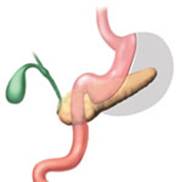
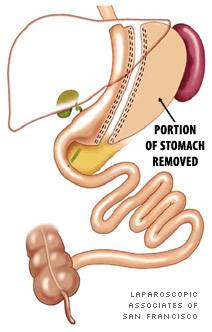
Sleeve Gastrectomy is a surgical weight loss procedure where the size of the stomach is reduced to about 30% of the usual size, so it would take the shape of a sleeve or tube. The procedure is performed laparoscopically and involves stapling the stomach.
A sleeve gastrectomy differs from a gastric bypass procedure because the operation does not involve any “rerouting” or reconnecting of the intestines. It also differs from a Lap-Band procedure because it does not require the implantation of an artificial device inside the abdomen.
What Are the Advantages of the "Sleeve?"
The sleeve gastrectomy has a number of advantages over other bariatric procedures:
- It does not require disconnecting or reconnecting the intestines
- It may be used as a first stage in staged procedures in a super super obese where a duodenal switch or gastric bypass might be technically demanding
- It is an effective procedure as a single step surgery in
- volume eaters,
- young and motivated to exercise
- of a lower BMI< 40
- extremes of age either below 18 or above 65.
LSG as a single-step procedure
The procedure is of significance for patients that are not super-super obese. In such cases Sleeve Gastrectomy as a stand alone procedure would be a very suitable operation with minimum risks.
LSG as a multi-step procedure
Sleeve gastrectomy is often performed in super-super obese patients, where the risk of performing a gastric bypass or duodenal switch procedure may be too large. So a two stage procedure would be performed from which the first is a sleeve gastrectomy, and the second a conversion into a gastric bypass or duodenal switch. Patients usually lose a large quantity of their excess weight after the first sleeve gastrectomy procedure alone, but if weight loss ceases the second step is performed.
Complications
Like any surgical operation, Sleeve gastrectomy could have complications like:
IMMEDIATE
- Injury to adjacent organs during surgery
- Leak from the staple line
- Pulmomary embolism
- Wound infection
LATE
- Subsequent dilatation of the stomach pouch in some cases and weight regain
- Increase in retrosternal burning in case of a Hiatus hernia.